

The Future of Cross-Border Payments in Latin America: How Technology and COLURS Are Building Real-Time Financial Interoperability
The Latin American Cross-Border Payments Landscape: By the Numbers
According to recent reports from Grand View Research and industry analysts, Latin America's cross-border payments market is on a steep upward trajectory. The region processed an estimated USD 140+ billion in cross-border transactions in 2024, with expectations to surpass USD 190 billion by 2030. This growth is driven by several key factors: Remittances: Latin America receives over USD 150 billion in remittances annually, with the US–Mexico corridor alone accounting for nearly USD 60 billion. These flows are critical lifelines for millions of families. E-commerce Expansion: Cross-border e-commerce in the region is growing at double-digit rates, with consumers increasingly purchasing from international merchants. SME Globalization: Small and medium-sized enterprises are expanding internationally, requiring efficient, affordable ways to receive payments from overseas customers. Fintech Adoption: Digital wallets, neobanks, and payment platforms have achieved significant penetration, particularly in Brazil, Mexico, Colombia, and Argentina.
How Cross-Border Payments Work Today: The Old and the New
To understand the transformation underway, it's important to grasp how cross-border payments traditionally function—and how emerging technologies are disrupting this model.
Traditional Rails: SWIFT and Correspondent Banking
For decades, SWIFT (Society for Worldwide Interbank Financial Telecommunication) has been the backbone of international money transfers. When you send money from the US to Brazil, for example, your bank uses SWIFT to send a message to a correspondent bank, which then routes the funds through potentially multiple intermediaries before they reach the recipient's bank.
This process is slow (often taking 2–5 business days), expensive (with fees ranging from 3% to 7% or more), and opaque. Each intermediary takes a cut, and currency conversion happens at unfavorable rates. For businesses and individuals sending smaller amounts frequently, these costs add up quickly.
Emerging Rails: RTP Networks, Blockchain, and Stablecoins
New payment infrastructure is challenging the SWIFT monopoly: Real-Time Payment (RTP) Networks: Countries like Brazil (PIX), Mexico (CoDi), and Colombia (Transfiya) have launched domestic instant payment systems. These allow near-instant transfers within a country, but cross-border interoperability has been limited—until now. Blockchain and Crypto Rails: Cryptocurrencies and stablecoins (like USDC and USDT) enable near-instant, low-cost cross-border transfers. However, regulatory uncertainty and volatility have limited mainstream adoption for business transactions. Interoperability Protocols: New standards like UMA (Universal Money Address) and platforms like Lightspark are bridging different payment networks, enabling real-time, low-cost international transfers using modern protocols.
Comparing Old Systems vs. New Rails
SWIFT/ACH: The Legacy System Speed: 2–5 business days Cost: 3–7%+ in fees Transparency: Limited visibility into routing and fees Accessibility: Requires bank accounts; not available 24/7 Compliance: Manual KYC/AML checks at each intermediary
UMA, Lightspark, RTP, and Blockchain: The New Generation
Speed: Near-instant (seconds to minutes) Cost: Often under 1% in fees Transparency: Real-time tracking and clear fee structures Accessibility: Available 24/7, integrates with digital wallets and neobanks Compliance: Built-in compliance protocols; automated KYC/AML checks The shift from legacy systems to modern rails is not just incremental—it's transformational. Businesses can now settle invoices in real time, freelancers receive payments instantly, and families send remittances without exorbitant fees.
The Role of Fintechs and COLURS in Reducing Friction
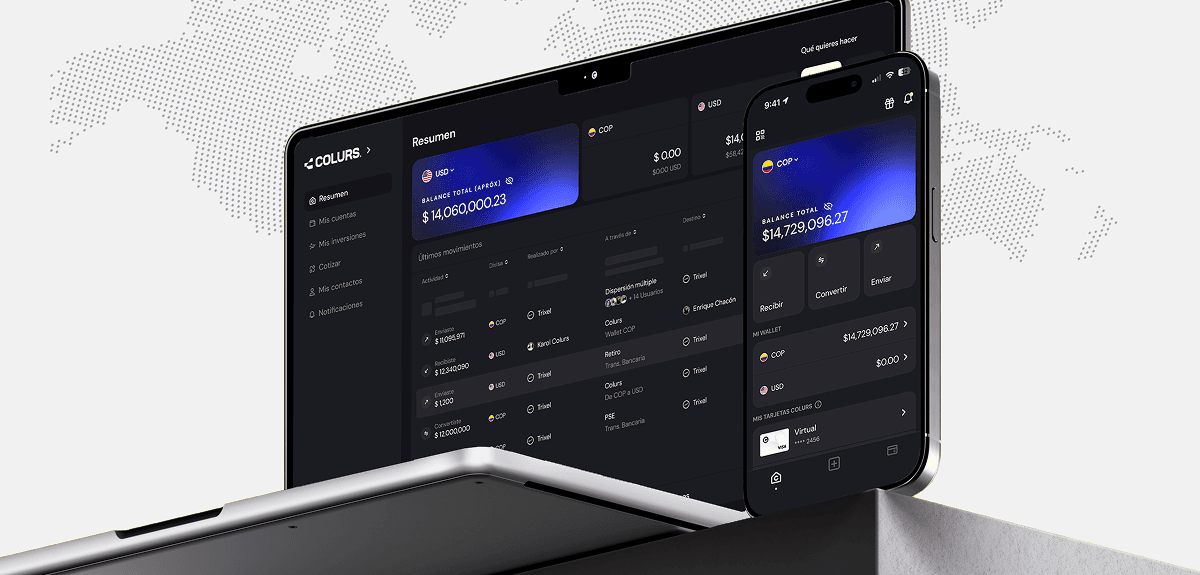
While the infrastructure for real-time cross-border payments is emerging, making it accessible and compliant requires sophisticated platforms. This is where fintechs like COLURS come in. COLURS is building the connective tissue between different payment networks, enabling seamless interoperability across borders. Here's how:
1. Unified API for Multiple Payment Rails
Instead of businesses having to integrate separately with PIX in Brazil, CoDi in Mexico, SWIFT for international banks, and blockchain networks, COLURS provides a single API that connects to all these systems. This dramatically reduces technical complexity and integration time.
2. Real-Time Foreign Exchange (FX)
One of the biggest pain points in cross-border payments is unfavorable FX rates. COLURS integrates with liquidity providers to offer competitive, transparent exchange rates in real time. This means businesses can see the exact cost of a transaction before committing, eliminating hidden fees.
3. Automated Compliance and KYC/AML
Regulatory compliance is a major barrier to cross-border payments. Each country has different rules around anti-money laundering (AML), know-your-customer (KYC), and sanctions screening. COLURS automates these checks using AI and machine learning, ensuring that transactions are compliant without manual intervention.
4. Interoperability with Emerging Protocols
COLURS is actively integrating with next-generation protocols like UMA and networks powered by Lightspark. This positions the platform to support not just today's payment needs, but tomorrow's innovations—whether that's Lightning Network for Bitcoin payments or cross-border stablecoin settlements.
Tags